We need your help to do something special. AI, APIs, and automated web scraping can deliver regularly updated open source intelligence about global fraud trends for a tiny fraction of the amounts people spend on flying to conferences to learn about fraud. Now would be a good time to change attitudes to intelligence by sharing it differently. But do we have the ambition and the will to make a change? Or is the communications industry destined to always lag behind organized crime?
They say talk is cheap, but it can be expensive. In order to talk to each other, policymakers and other professionals are pressured into paying membership fees, admission fees, hotel charges and the cost of flights to attend conferences. This is not a good way to provide decision-makers with the maximum amount of objective information about the most recent trends in fraud. Is it a surprise that people then complain criminals are always two steps ahead?
They also say you should learn from mistakes. But we are not learning from past mistakes made by the communications industry. We are not getting better at sharing data about fraud. And when we make mistakes, they are often covered up. We need a better way to present neutral unbiased data without anyone feeling embarrassed by the facts. Crime has been getting worse. Sometimes we need to admit that circumstances are bad so we can learn how to make them better.
It is typical for a plea like this to present some estimate of the millions, billions or trillions stolen by criminals using networks. We are not going to do that because those estimates are unreliable. We are not going to pretend to know things because it confers a bogus sense of expertise. Any fool can make up numbers. It takes a special type of fool to make decisions based upon made-up numbers.
And there is another reason not to make up numbers about the cost of scams. Organized crime has passed the point where scams have become a matter of life or death for some people. Murder, torture, human trafficking and modern-day slavery are also tools of the 21st century scammer, alongside SMS blasters, simboxes and deepfaked clones. It is uncomfortable to talk about people dying because the communications sector is failing to prevent scams. It is uncomfortable but it is increasingly necessary. The cost of the global scam industry now extends well beyond anything that can be counted in dollars, euros or yuan.
This is the 20th year of Commsrisk as an independent source of information about the risks faced by the comms sector and its customer. In this context, ‘independent’ means ‘our message is not controlled by who pays us’. The idea was always to be impartial. As a consequence, we have sometimes needed to upset people that present an impression of their work which conflicts with impartial, objective sources of information. Our goal has never changed, but technology has changed a lot. When we began, using WordPress to construct a website was novel. Now we are in a new era, when AI and other technologies allow us to automate the collection and processing of information from sources around the world in ways that were previously unimaginable.
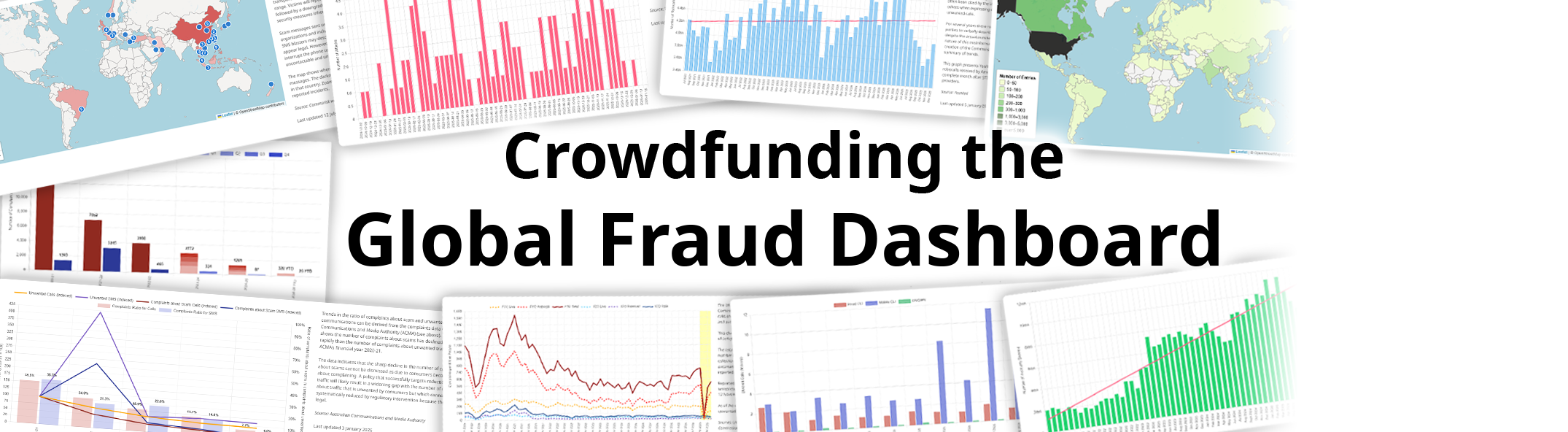
Regular readers of Commsrisk already know the editorial policy of this site. We make no apology for it. If we have to upset people to get them to do a better job of reducing the harm caused by the criminal abuse of networks then we will upset people. Now we have a new way of upsetting people that is even harder to ignore than the words we publish. Since its launch last year, we have shown the Global Fraud Dashboard can collate data and demonstrate the truth about worldwide trends more effectively than words ever will. Whether this involves contradicting the claims of politicians that robocall trends have been downwards when actually they were heading upwards, or comparing consumer complaint data from different countries to reveal whose policies have had the most impact, or monitoring the spread of SMS blaster crime from country to country, our charts provide insights unlike those found elsewhere.
The chief developer of the Commsrisk Global Fraud Dashboard, James Greenley, is a bona fide genius. However, I cannot ask James and his assistants to work for free. They already receive too little compensation relative to the value they deliver. That is why I am asking you — I am begging you — to help us by making a donation to our crowdfunding campaign. Our target of USD10,000 (GBP7,250) will allow us to massively expand the number of data sources that we can mine on a daily, weekly and monthly basis. It will enable us to greatly increase the number of charts we present, and the geographic range of the comparisons we construct.
All or nothing. Make or break. Shit or bust. If we miss our fundraising goal then Commsrisk is shutting down. We either develop a unique open source intelligence resource for policymakers concerned about consumer scams and other network abuses, or we stop trying to influence an industry that does not want to listen to the stories told by its own data. We are grateful for all the support we have received from readers over the years. Now I ask you to help us again, so we can do something that nobody else is trying to accomplish because nobody else is both independent and credible in the way Commsrisk is. That means relying on the generosity of many donors so nobody gets to control the output from the Global Fraud Dashboard. We want to present comprehensive data from around the world that remains pure and untainted by bias.
Thousands of people visit Commsrisk each day, consuming our content for free. If just one thousand people chose to donate $10 each then we would meet our fundraising target. Spreading the burden over many donors also means no single donor can exert undue influence over the results we present.
And in case you wondered, there will be rewards for donors. The top 250 donors will be invited to regular online question-and-answer sessions where we will explain the charts that have been added to the dashboard and what they tell us about the latest trends. Donors who pledge GBP500 (approximately USD700) or more will be offered one-on-one sessions at times which are convenient for them, and their names will be featured prominently on the dashboard. Get in touch if you want to discuss the rewards before you make your crowdfunding pledge. It goes without saying that every donor will receive our public thanks (unless they prefer to remain anonymous).
I do not know if this crowdfunding exercise will succeed. But I had no inkling in 2006 that I might still be publishing Commsrisk in 2026, or that the most popular page would display an AI-powered map of locations where fake base stations have sent SMS messages containing hyperlinks to phishing sites made from prepackaged webkits. Times change; we need to change with them. I would never have expected so many people would now be reading a niche website for risk professionals in the communications sector. One reason the audience has grown so large is that the problem of networked abuses has also grown so overwhelming. With your help, perhaps we can make a unique contribution to turning the tide on global fraud.
Click here to pledge your donation through Kickstarter.
Eric Priezkalns, Commsrisk Editor